



Keeping your brain sharp doesn’t have to be complicated. At Westmont of Pinole, we understand the value of mental fitness and offer simple, daily memory exercises for seniors that help keep your mind active and engaged.
Whether you’re living independently or receiving support, maintaining brain health is essential. From relaxing meditation to challenging puzzles, these practices can help improve cognitive function and memory, reduce stress, and even spark joy. Plus, memory exercises for seniors at home or in a community setting are easy to integrate into your daily life.
For more information, visit our website at Westmont of Pinole.
The Power of Daily Meditation for Mental Clarity
Daily meditation is one of the most accessible memory exercises for seniors. It doesn’t require any equipment—just a few quiet minutes each day. Practicing mindfulness can reduce anxiety, enhance focus, and improve cognitive function and memory.
You can begin with basic breathing techniques or guided meditations tailored to seniors. Over time, you may notice improved emotional resilience and mental clarity. Even better, these memory exercises for seniors are free, making them a perfect addition to any wellness routine.
Learn more about helpful mindfulness techniques to begin your journey.
Visualization: A Mental Tool to Sharpen Memory
Visualization techniques are effective, especially for memory exercises for seniors with dementia. By turning ideas into vivid images, the brain strengthens connections, making it easier to recall everyday tasks.
For example, picture the items on your grocery list placed in different corners of your kitchen. This simple mental map can significantly boost recall. Visualization is a skill that can be practiced anywhere, which makes it a great option for memory exercises for seniors at home.
Pair this technique with a nutritious diet to amplify its cognitive benefits.
Brain Games That Spark Joy and Mental Agility
Brain games are not only fun—they’re fantastic for keeping your mind sharp. Games like crossword puzzles, word searches, Sudoku, and trivia help improve cognitive function and memory while encouraging creative thinking and focus.
These memory exercises for seniors are free and accessible through books, newspapers, or mobile apps. Incorporating games into your daily routine can stimulate your mind and even lift your mood.
Explore some of the best brain-boosting activities recommended by our community.
Card Games: Fun, Social, and Stimulating
Card games like bridge, poker, or solitaire are excellent memory exercises for seniors at home or in a group. They require memory recall, attention to detail, and strategic thinking.
More importantly, they foster social engagement, a critical component in protecting against memory decline. These games challenge the brain in fun and meaningful ways, offering seniors a productive way to spend time with peers.
Check out more mentally stimulating activities for seniors in memory care settings.
Puzzles That Enhance Brain Health
From jigsaw puzzles to Sudoku and word games, solving puzzles is a tried-and-true method for memory exercises for seniors. Puzzles are versatile and suitable for a range of ability levels, making them perfect for seniors with varying cognitive needs.
| Puzzle Type | Benefits | Ideal Frequency |
| Jigsaw Puzzles | Improves visual-spatial skills | 2–3 times per week |
| Sudoku | Boosts logic and focus | Daily |
| Crossword Puzzles | Enhances vocabulary and recall | 2–3 times per week |
To deepen your cognitive routine, explore memory games that offer fun and functionality.
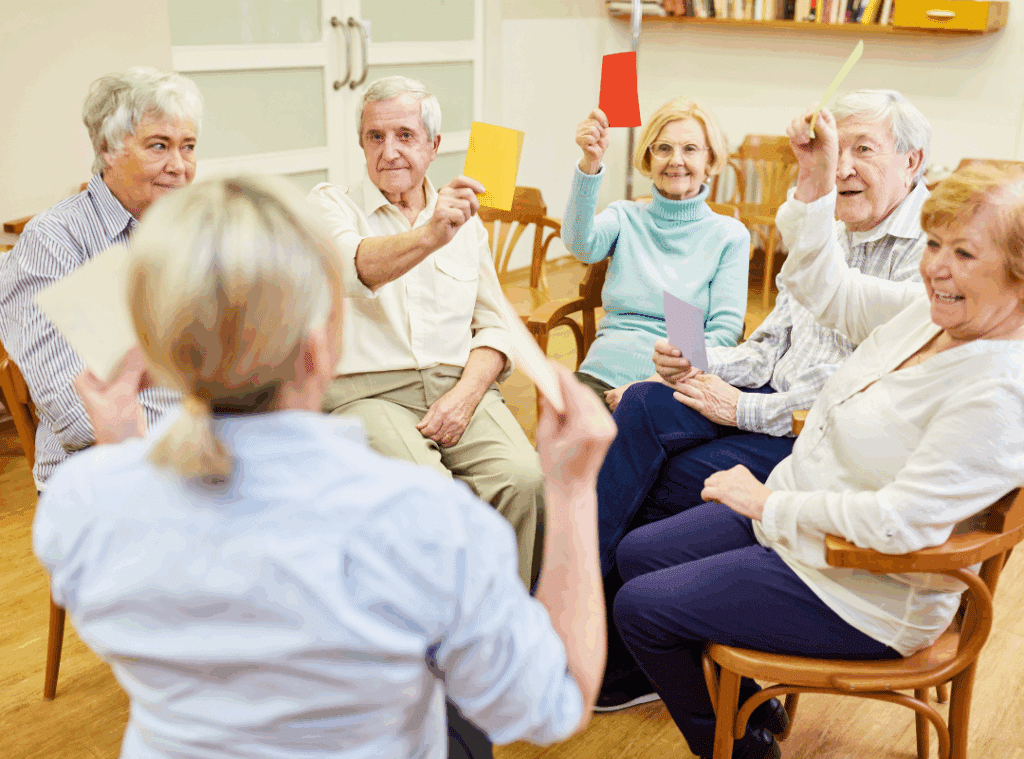
Social Interaction: A Vital Ingredient for Memory Health
Social connection plays a powerful role in supporting mental function and reducing cognitive decline. Community involvement, game nights, and support groups can be part of your daily memory exercises for seniors.
Regular social activity has been shown to reduce the risk of dementia and improve cognitive function and memory. Whether it’s a weekly book club or a simple chat with neighbors, human connection is brain fuel.
Senior centers often host free events that promote mental wellness and offer more opportunities to engage.
Lifelong Learning: Challenge Your Brain and Grow
Learning a new skill is one of the most rewarding memory exercises for seniors. It builds new neural pathways and keeps your brain active. Think about learning to paint, trying a new recipe, or picking up a foreign language.
Studies show that lifelong learning can delay cognitive decline and reduce the risk of dementia. Plus, the sense of accomplishment from learning something new boosts mood and self-confidence.
Here are a few ideas to get started:
- Take an online photography class
- Join a beginner’s language group
- Try a new musical instrument
- Attend a cooking workshop at your local community center
You can access online platforms like Senior Planet for free classes and tutorials tailored to older adults.
Hobbies That Reinforce Memory and Joy
Having a hobby provides structure and joy, two elements that are beneficial for memory. Gardening, painting, and journaling are excellent memory exercises for seniors with dementia or those in the early stages of memory loss.
These hobbies promote mindfulness, hand-eye coordination, and cognitive recall. They also offer moments of peace and pride, which are essential for emotional well-being.
Seniors can thrive when these activities are made a regular part of their day.
The Cognitive Magic of Music
Music holds a special place in memory care. Listening to music or playing instruments activates multiple areas of the brain at once, including those linked to emotions and long-term memory.
For seniors, especially those with dementia, music can spark recognition and emotional connection. Group music sessions also promote interaction and joy.
| Activity | Cognitive Benefit |
| Listening to Favorite Tunes | Sparks memory recall |
| Playing an Instrument | Improves coordination and focus |
| Singing in Groups | Boosts mood and social bonding |
Whether it’s attending a sing-along or listening to a playlist from the past, music is one of the most uplifting memory exercises for seniors.
Discover the Joy of Home-Based Memory Exercises
Many seniors prefer to remain in the comfort of their homes, and luckily, there are countless memory exercises for seniors at home. From mobile brain game apps to online classes and video tutorials, options are abundant and effective.
Even basic household routines—like organizing a photo album, writing letters, or reading aloud—can serve as engaging memory boosters. The key is to stay mentally active and find joy in small, meaningful tasks.
For more ideas on staying mentally sharp from home, explore resources from the Alzheimer’s Association.
Keep Your Mind Young and Your Spirit Engaged
At Westmont of Pinole, we encourage a lifestyle that supports both brain and heart. By embracing memory exercises for seniors, whether through music, puzzles, games, or social connection, you’re investing in your mental well-being and overall quality of life.
These routines are enjoyable, empowering, and often free to implement. From memory exercises for seniors at home to programs tailored for memory exercises for seniors with dementia, the journey to a sharper mind begins with one small step.
Call us at 510-758-1122 or schedule a tour to experience a community dedicated to keeping your mind, body, and spirit engaged.
Frequently Asked Questions
What can seniors do to improve their memory?
Seniors can improve memory through a combination of mental, physical, and social activities. Engaging in brain games, puzzles, and reading stimulates cognitive function. Regular physical activity, like walking or swimming, promotes healthy blood flow to the brain. Staying socially active and maintaining a healthy diet rich in omega-3s and antioxidants also support memory retention.
What is the best exercise to improve memory?
Aerobic exercises like brisk walking, cycling, or dancing are considered the best for memory improvement. These activities increase heart rate and improve circulation, delivering more oxygen to the brain. Studies show that regular aerobic exercise can enhance the size of the hippocampus, the part of the brain responsible for memory. Aim for at least 150 minutes of moderate activity per week for optimal benefits.
What is the best memory enhancer for seniors?
The best memory enhancers for seniors are often lifestyle-based rather than pharmaceutical. A Mediterranean-style diet, regular sleep, mental stimulation, and exercise all contribute to improved memory. Supplements like omega-3 fatty acids, vitamin B12, and ginkgo biloba may help but should be used with a doctor’s guidance. It’s important to combine multiple approaches for the best results.
What is the best exercise to reduce memory loss in older adults?
The best exercises to reduce memory loss in older adults are aerobic and mind-body activities like walking, swimming, yoga, and tai chi. These exercises not only improve physical health but also lower stress, which can negatively impact memory. Consistency is key—engaging in these activities several times a week supports long-term cognitive health. Combining physical movement with mental engagement, such as dancing or playing sports, offers additional benefits.