

Chair exercises for seniors are one of the safest and most effective ways to stay active, build strength, and improve flexibility, all from the comfort of a sturdy chair. Whether you’re in your 70s, 80s, or beyond, these seated movements support better balance, healthier circulation, and greater independence in everyday life.
At Westmont of Chico, residents benefit from the Live Your Way Wellness Program and on-site Fitness Center, where staying active is woven into daily life. But you don’t need a gym to get started. The seven exercises below are simple, proven, and accessible to nearly everyone.
If you’re also exploring ways to keep your whole body moving, our guide on the top 10 leg exercises for seniors is a helpful companion read.
What Makes Chair Exercises So Effective for Older Adults?
Chair exercises work because they remove the fear of falling while still engaging the muscles that matter most. According to the National Council on Aging, falls are the leading cause of injury among older adults, and regular strength and balance training is one of the most effective ways to reduce that risk.
Seated workouts are especially beneficial for seniors over 70 and over 80 because they can be adapted to any fitness level, require no special equipment, and can be done at home or in a community setting. The key is consistency; even a short daily session creates meaningful results over time.
7 Chair Exercises for Seniors to Build Strength and Flexibility
The following exercises target the lower body, upper body, and core, the three areas most responsible for mobility, posture, and fall prevention. Perform each exercise in a stable, armless chair with your feet flat on the floor.
1. Seated Leg Lifts
Sit upright and extend one leg straight out in front of you. Hold for a few seconds, then slowly lower it. Alternate legs for 10–15 repetitions each. This move targets the quadriceps and hip flexors, building the lower body strength needed for standing, walking, and climbing stairs.
2. Chair Marching
Lift your knees alternately in a slow, controlled marching motion while swinging your arms for momentum. This is one of the most accessible cardiovascular exercises available; it elevates heart rate, improves circulation, and enhances coordination without putting stress on the joints.
3. Seated Torso Twists
Sit tall with feet flat on the floor. Place your hands gently behind your head or on your shoulders. Slowly rotate your upper body to one side, hold briefly, then return to the center and twist the other way. Repeat 5–10 times per side. This exercise improves spinal flexibility, strengthens the core, and can help reduce back tension.
4. Arm Raises
With arms at your sides, slowly lift both arms to shoulder height, hold for a moment, then lower them with control. Aim for 10–15 repetitions. Regular arm raises build shoulder mobility and upper body strength, making it easier to reach overhead, carry groceries, or assist with daily tasks.
5. Ankle Pumps
With feet flat on the floor, lift your toes while keeping your heels grounded, then reverse, lift your heels while keeping your toes down. Do 10–15 repetitions of each movement. This simple exercise significantly improves circulation in the lower legs, reduces swelling, and is particularly beneficial for seniors who spend extended time sitting.
6. Seated Side Bends
Sitting tall, inhale and raise one arm overhead. As you exhale, lean gently to the opposite side to feel the stretch along your side body. Hold briefly, return to center, and switch sides. Repeat 5–8 times per side. This movement improves lateral flexibility, supports better posture, and gently releases tension in the spine.
7. Heel-Toe Raises
Slowly lift your heels off the ground, engaging your calf muscles, then lower them. Next, lift your toes while keeping your heels grounded, engaging the shins. This exercise builds lower-leg strength, improves balance, and is easy to progress by slowing the movement or performing it on one leg at a time.
How to Build Your Chair Workout: 10-Minute and 30-Minute Options
One of the most common questions seniors ask is how long chair workouts should be. The answer depends on your starting point and goals. The table below outlines three structured options, ranging from a quick 10-minute daily chair workout for seniors to a more complete 30-minute chair workout for seniors.
| Fitness Level | Duration | Exercises | Reps / Sets |
| Beginner | 10 minutes | Ankle Pumps, Arm Raises, Chair Marching | 10 reps × 1 set |
| Intermediate | 20 minutes | All 7 exercises | 10–12 reps × 1–2 sets |
| Active Senior | 30 minutes | All 7 + Seated Bicep Curls + Chair Aerobics | 15 reps × 2–3 sets |
Even a consistent 10-minute chair workout for seniors has real benefits, including improved circulation, better joint mobility, and a gentle cardiovascular effect. As you grow stronger, working up to a 30-minute chair workout for seniors helps build greater endurance and muscle tone over time.
Chair Exercises for Seniors Over 70 and Over 80: Key Adjustments
Chair exercises for seniors over 70 and over 80 follow the same foundational movements, but a few adjustments make them safer and more effective.
Prioritize range of motion over repetitions. If a full arm raise feels uncomfortable, lift only as high as your shoulder allows. A partial movement done safely is more beneficial than a full one done with strain.
Use slow, controlled pacing. Faster movement increases the risk of losing balance or overextending a joint. Counting to three on the way up and three on the way down keeps motion deliberate and effective.
Check your chair first. For chair exercises for seniors over 80 in particular, choosing a non-wheeled, non-cushioned chair placed against a wall adds an extra layer of stability. The American Physical Therapy Association recommends having a physical therapist review your exercise routine if you have a history of falls, recent surgery, or significant joint pain.
Listen to your body throughout every session. Mild muscle fatigue is expected; sharp or joint pain is a signal to stop.
Beyond the Basics: Chair Aerobics and Seated Bicep Curls
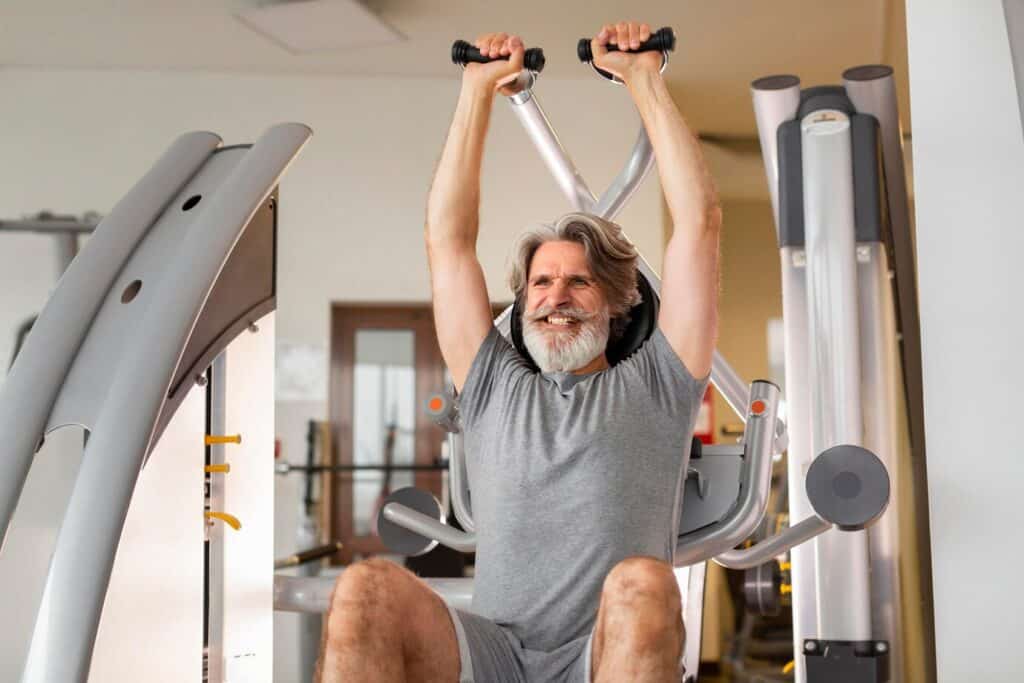
Once the core seven exercises feel comfortable, two additions can round out a fuller workout.
Chair aerobics combines seated movement with upbeat music to create a fun, heart-healthy routine. It improves coordination, mood, and cardiovascular fitness, and it’s a natural fit for group settings like the activity programs offered at Westmont of Chico.
Seated bicep curls are simple to add at home. Hold a lightweight or a water bottle in each hand, keep your elbows close to your body, and slowly curl the weights toward your shoulders before lowering them with control. Aim for 10–15 repetitions. This builds arm strength that directly supports daily activities like lifting, carrying, and opening doors.
For those looking for free chair exercises for seniors at home, SilverSneakers offers accessible video tutorials and printable guides at no cost.
Stay Active Every Day at Westmont of Chico
Staying physically active doesn’t have to be complicated, and it shouldn’t feel like a chore. The seven exercises in this guide are gentle enough to begin today and effective enough to make a real difference in strength, flexibility, and confidence over time.
At Westmont of Chico, physical wellness is supported every day through the Live Your Way Wellness Program, an on-site Fitness Center, and On-site Therapy Services, giving residents the tools, space, and encouragement to stay as active as they choose. Whether you’re exploring Assisted Living at The Inn, Independent Living at The Lodge, or Memory Care at Compass Rose, movement and well-being are central to life at our community in Chico, CA.
We’d love to show you what an active, supported lifestyle looks like in person. Schedule a tour or call us at 530-767-3886 to learn more.
Frequently Asked Questions About Chair Exercises for Seniors
Do chair workouts really work for seniors?
Yes, chair workouts are genuinely effective for seniors. They improve muscle strength, flexibility, and circulation while reducing the risk of falls. Research consistently supports seated exercise as a safe and meaningful form of physical activity, especially for older adults with limited mobility or balance challenges. Consistency matters more than intensity; even short daily sessions produce measurable results over weeks and months. If you’re unsure where to start, a care assessment can help identify the right level of support for your needs.
How can I flatten my stomach while sitting in a chair?
Seated exercises like torso twists, seated knee lifts, and conscious core engagement during every movement can help tone abdominal muscles over time. These movements strengthen the core, improving posture and reducing the appearance of a rounded midsection. True abdominal changes also require overall physical activity and a balanced diet; spot reduction alone is not possible. However, consistent chair exercises, combined with healthy habits, can meaningfully contribute to a stronger, better-supported core.
Are there any free chair exercises for seniors at home?
Many free resources exist for seniors who prefer to exercise at home. SilverSneakers and several senior health organizations offer no-cost video tutorials and printable guides covering a wide range of seated exercises. The seven movements in this article also require no equipment and can be performed anywhere with a stable chair. Exercising at your own pace and adjusting for your comfort level is always appropriate.
Does a 7-minute chair workout work?
A 7-minute chair workout can be a useful starting point, particularly for new seniors or those returning after a period of inactivity. While it may not replace a full routine, it builds the habit of daily movement and delivers real benefits to circulation, joint mobility, and muscle tone when done consistently. Over time, gradually extending sessions to 10 or 30 minutes will yield greater improvements in strength and endurance. Pairing it with a lifestyle assessment can help you build a routine that matches your personal goals.