



Speech Therapy for Seniors helps older adults improve speech clarity, language understanding, daily communication, and confidence when speaking with family, friends, and caregivers. For families in Fresno, Westmont of Fresno offers a supportive senior living setting where connection, engagement, and daily routines can help seniors feel more comfortable.
Speech and language changes can feel discouraging, especially when words are harder to find or when conversations take more effort. With the right support, seniors can practice communication strategies, stay involved in meaningful activities, and feel more confident in everyday conversations.
What Is Speech Therapy for Seniors?
Speech Therapy for Seniors is a form of support that helps older adults strengthen communication skills, speech clarity, language comprehension, and confidence in daily conversations. Speech-language pathologists assess and treat speech, language, social communication, cognitive-communication, and swallowing concerns in adults, according to ASHA’s overview of speech-language pathologists.
This type of support may include:
- Speech clarity practice
- Language and word-finding support
- Communication strategies for daily routines
- Family guidance and caregiver involvement
- Progress tracking as needs change
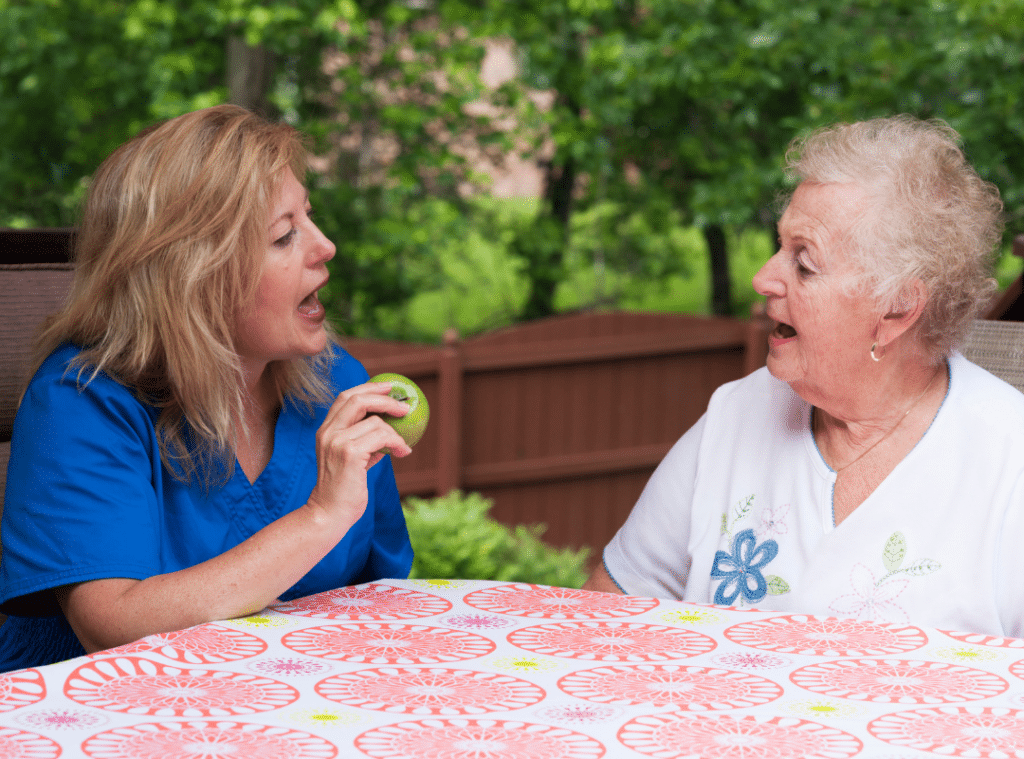
Common Speech and Language Challenges Seniors May Face
Seniors may experience trouble finding the right words, forming clear sentences, or keeping up with conversations. These changes can lead to frustration, reduced confidence, and less social interaction.
Some communication challenges may be connected to broader speech and language conditions. For example, the National Institute on Deafness and Other Communication Disorders reports that about 2 million people in the United States currently have aphasia, a language disorder that can affect speaking and understanding language.
Difficulty Finding Words or Forming Sentences
You may notice that your loved one pauses more often, loses their train of thought, or struggles to explain simple ideas. Speech therapy can help create practical ways to communicate with less stress.
Frustration, Isolation, and Reduced Social Interaction
When speaking feels difficult, some seniors may avoid conversations. Gentle support, patience, and regular engagement can help rebuild comfort and connection.
Why Early Support and Tailored Therapy Matter
Early support can help seniors stay connected before communication challenges become more discouraging. When speech and language concerns are addressed sooner, seniors may feel more comfortable participating in conversations, activities, and family moments.
Tailored therapy works best when it starts with the senior’s current abilities, goals, and daily communication needs. A personalized plan helps make therapy feel practical, meaningful, and easier to follow.
Comprehensive Assessment
A therapist may begin by assessing speech clarity, language comprehension, and everyday communication patterns. This helps identify what kind of support may be most helpful.
Personalized Goals
Clear goals help seniors and families see progress over time. These goals may focus on speaking more clearly, understanding conversations better, or feeling more confident during daily interactions.
Adaptable Therapy Plans
Needs can change, so therapy plans may adjust as progress is made. This keeps support relevant and centered on the senior’s real-life communication needs.
Speech Therapy Exercises and Daily Communication Strategies
Speech therapy exercises and daily communication strategies can help seniors practice skills in familiar routines. Simple adjustments, such as speaking slowly or using visual cues, can make conversations easier and more comfortable.
| Strategy | How It Helps | When to Use It |
| Speak clearly and slowly | Gives the senior time to understand and respond | During conversations |
| Use visual aids | Supports understanding through pictures or gestures | During daily routines |
| Encourage repetition | Helps reinforce key information | During discussions |
| Practice active listening | Helps the speaker feel heard and supported | During conversations |
| Simplify language | Makes communication easier to follow | During everyday interactions |
These strategies work best when they feel natural. A calm tone, enough response time, and patient listening can make a meaningful difference.
Real-Life Scenarios Where Speech Therapy Support May Help
Speech therapy support may help when a senior often stops mid-sentence, avoids group conversations, or becomes frustrated when trying to explain something. These moments can be emotional for both the senior and the family, especially when communication once felt effortless.
You may also notice that your loved one benefits from reminders, visual cues, or simpler wording during daily routines. These small changes can help conversations feel less overwhelming and more supportive.

Progress Monitoring, Family Support, and Helpful Tools
Progress monitoring helps therapists understand what is improving and where more support may be needed. Tracking communication skills over time can help therapy stay focused on the senior’s needs.
Family involvement can also make a big difference. Loved ones can practice strategies at home, offer encouragement, and create a calm space for conversation. If you are unsure what level of support may fit your loved one, the Westmont of Fresno Care Assessment can be a helpful next step.
Technology Tools That May Support Speech Improvement
Technology can make speech practice more engaging and easier to access. Tools such as virtual reality programs, mobile apps, online platforms, and artificial intelligence-supported tools may help seniors practice communication in interactive ways.
Support Communication and Connection at Westmont of Fresno
If you are searching for Speech Therapy for Seniors near me, location and daily support matter. Westmont of Fresno is located at 7442 North Millbrook Avenue in Fresno, CA, and offers Independent Living, Assisted Living, and Memory Care. A supportive environment with activity rooms, a library, a fitness center, an art studio, spacious living areas, scheduled transportation, and 24-hour availability can help seniors stay engaged in daily life. To explore therapy-related resources connected to this community, visit the Westmont of Fresno on-site therapy page.
Speech Therapy for Seniors can help communication feel less frustrating and more connected. To see whether the community feels like the right fit, you can schedule a tour at a time that works for your family. For questions before you visit, contact us or call us at 559-446-1266, and a team member can guide you through your next steps with care.
Frequently Asked Questions
What does a speech therapist do for the elderly?
A speech therapist helps older adults improve communication skills, speech clarity, language comprehension, and confidence in daily conversation. They may also help create personalized goals based on the senior’s needs. Support can include exercises, communication strategies, and progress monitoring. Family involvement may also be encouraged so that practice continues in daily routines.
What vitamin helps with speech delay?
No single vitamin should be presented as a solution for speech delay without professional guidance. Speech or language concerns can have different causes, so talk with a qualified healthcare professional before trying supplements. For seniors, changes in communication may require a broader evaluation. A speech therapist or healthcare provider can help identify the most appropriate next step.
Can SLP do endoscopy?
A speech-language pathologist may be involved in endoscopy-related swallowing evaluations only when properly trained and allowed by applicable rules, facility policies, and professional requirements. ASHA explains that SLPs with appropriate training and competence in FEES are qualified to use the procedure independently for assessing swallow function, though state rules, facility policies, and payer requirements may apply. ASHA’s FEES guidance explains these requirements in more detail. Families should ask the provider directly about qualifications, scope, and local requirements.
Is 70 too old for therapy?
No, 70 is not too old for therapy. Seniors can benefit from support that is tailored to their goals, comfort level, and current communication needs. Speech therapy can help older adults practice clearer communication and feel more confident in daily interactions. The best plan depends on the individual’s needs and should be guided by a qualified professional.